Tennis Strings and Tension
The most overlooked tennis equipment, and the one that changes feel the most.
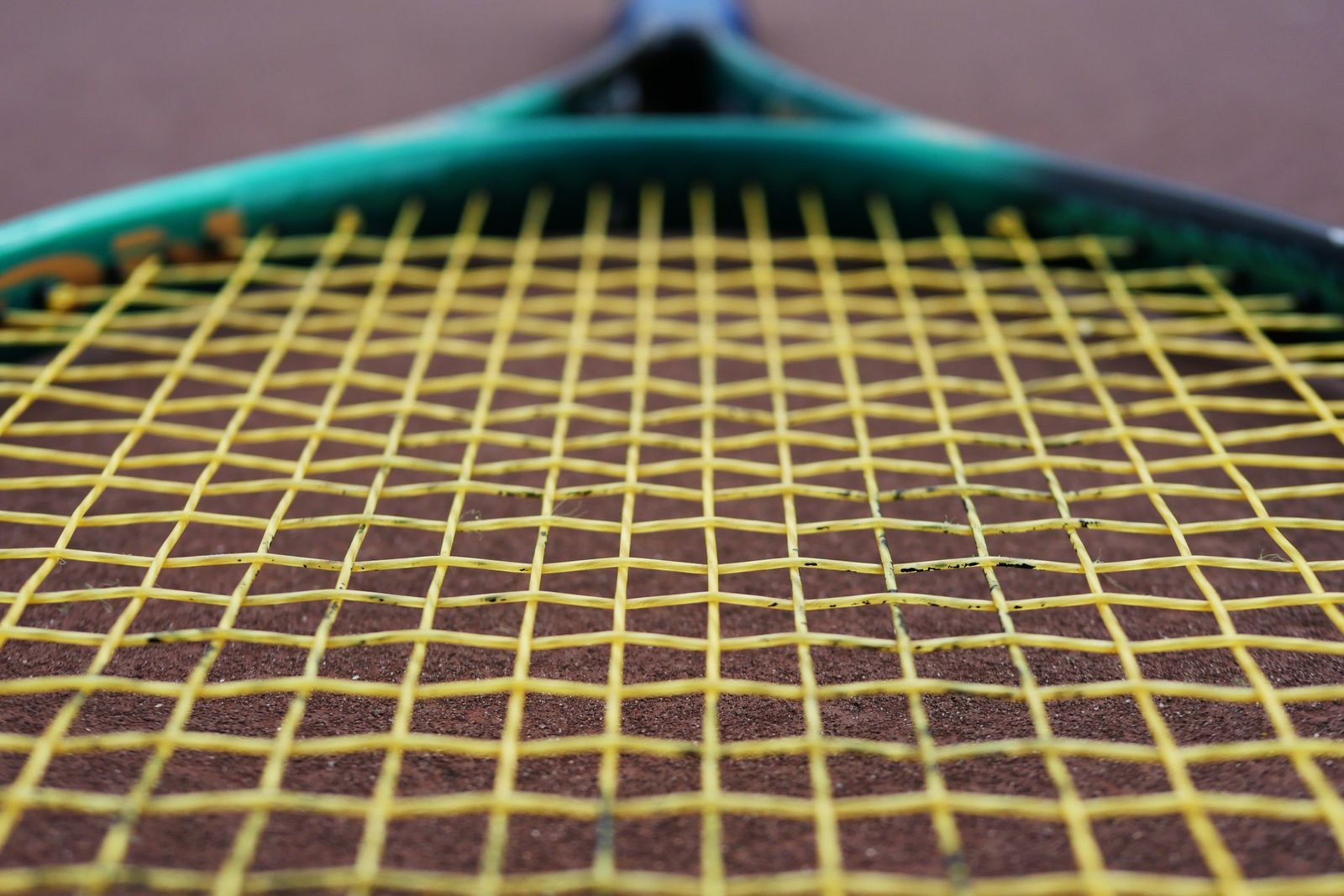
Find a StringerStrings are the only part of the racquet that touches the ball, yet they are the most overlooked piece of tennis equipment. Changing string type or tension can change how a racquet feels more than changing frames.
String Materials
| Material | Feel | Who it suits |
|---|---|---|
| Synthetic gut (nylon) | Balanced, all-round | Beginners and recreational players; an easy starting point |
| Multifilament | Soft, comfortable | Players who want arm comfort and feel |
| Natural gut | Very soft and lively, holds tension well | Players who prioritize feel and comfort |
| Polyester (co-poly) | Stiff, controlled, spin-friendly | Hard hitters with full swings; often too firm for sensitive arms |
| Hybrid | Mix of two strings in mains and crosses | Players blending durability, spin and comfort |
Tension in Plain Terms
- Lower tension lets the string bed flex more: more power and comfort, a little less control.
- Higher tension makes the string bed firmer: more control, less power and a harsher feel.
- Recommended range: most frames print a tension range on the throat or inside the frame. Stay inside it.
- Tension drops after stringing and keeps dropping with play, faster with some materials than others.
Choosing a First String Setup
If you have never thought about strings, start with a synthetic gut in the middle of your racquet’s tension range. Play with it for several weeks, then change one thing at a time. If shots feel short, try a few pounds lower. If the ball flies long, try a little higher. If your arm aches, move to a softer multifilament before you change anything else. Writing down each setup and how it felt makes the next choice much easier. A local stringer can also suggest options based on how often you break strings and how hard you swing.
Gauge, Restringing and Care
Gauge is string thickness. Thinner strings give more feel and spin but break sooner; thicker strings last longer. If you break strings often, try a thicker gauge or a more durable material before anything else.
- Restring when strings go dead, move out of place easily or break.
- Keep racquets out of hot cars; heat speeds tension loss.
- Replace a worn overgrip at the same time as strings so the racquet feels fresh all round.
- Ask a local stringer to record your string and tension so you can repeat or adjust it.
Frequently Asked Questions
How often should I restring my racquet?
A common rule of thumb is to restring as many times a year as you play per week. Frequent players and anyone using polyester strings often restring sooner, because polyester loses tension and liveliness.
What tension should I use?
Start in the middle of the range printed on your racquet frame. Go lower if you want more power and comfort, higher if you want more control. Change in small steps.
Find a Local Stringer
Many tennis shops and clubs offer stringing. Find tennis businesses near you.
Find Local Businesses