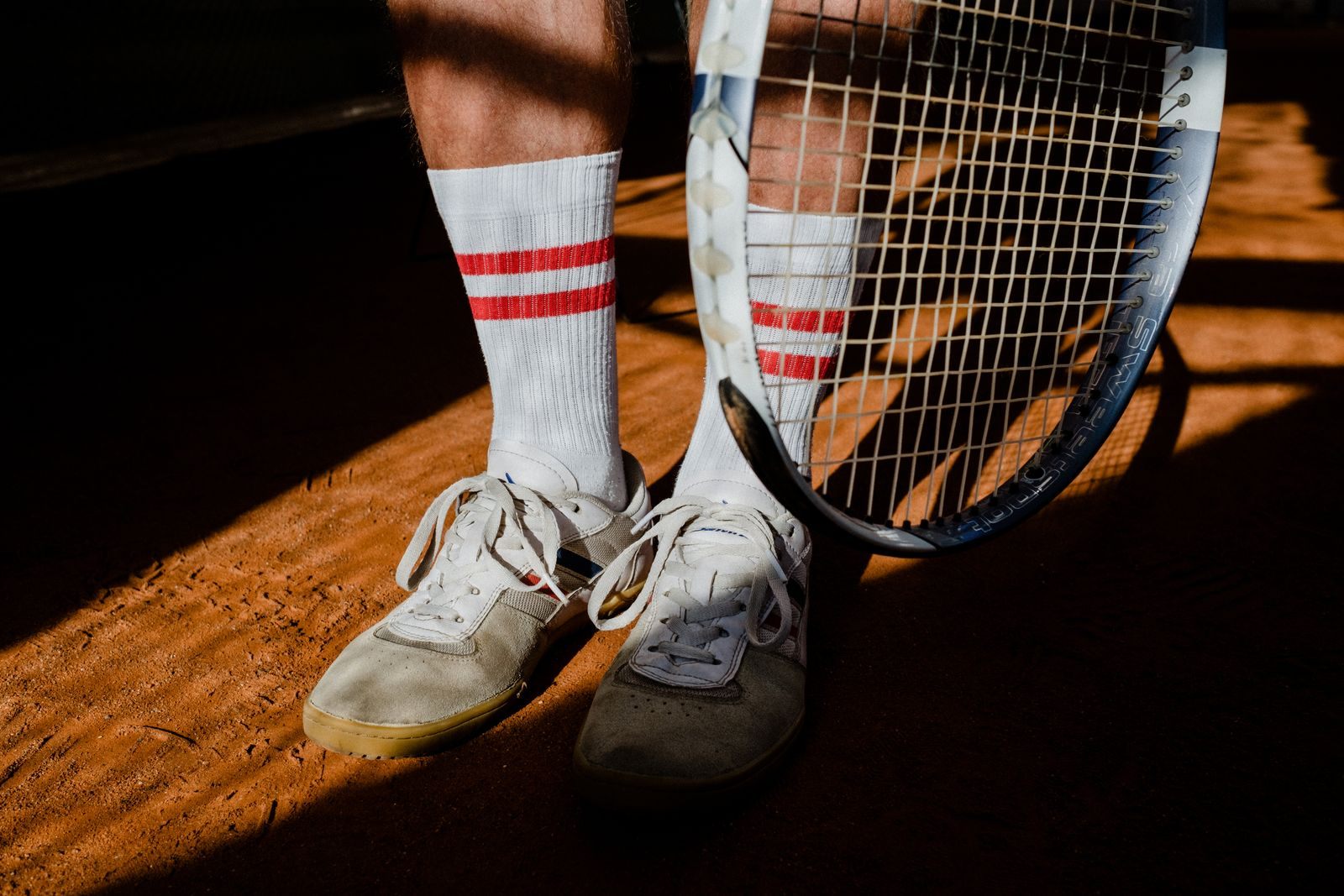
Tennis Shoes by Court Surface
Lateral support for every player, and the right tread for the court you play on.
Try Shoes LocallyTennis is a sport of sudden stops, side shuffles and quick direction changes. A tennis shoe is built for that lateral load, and the outsole is tuned to the court surface.
Shoes by Court Surface
| Surface | Outsole | Why |
|---|---|---|
| Hard court | Durable rubber, often a modified herringbone; extra toe protection | Abrasive surfaces wear soles quickly |
| Clay | Full herringbone (zigzag) tread | Grips loose clay and lets it fall out of the grooves; helps controlled sliding |
| Grass | Small rubber nubs or pimples | Grip on grass without damaging it; many grass clubs require them |
| Indoor carpet | Smoother, non-marking sole | Too much grip on carpet can catch; clubs often specify non-marking soles |
| All-court | A blend, usually herringbone-based | A sensible choice for players who switch surfaces |
Fit and Support
- Try shoes on with tennis socks, late in the day when feet are largest.
- Leave a thumb’s width at the toe; your foot should not slide inside on side steps.
- Look for a firm heel counter and lateral support around the midfoot.
- Non-marking soles are required on most indoor and many club courts.
- Replace shoes when the tread is smooth in the forefoot or the cushioning feels flat.
Choosing for Your Game
Baseline players
Look for a durable outsole and stable base for long rallies and lots of side-to-side movement.
Net rushers
A lighter shoe with a responsive forefoot helps quick first steps.
Players with wide feet
Many shoes come in wide widths; try several, since fit varies between makers.
Juniors
Check fit every few months; growing feet outgrow shoes long before the tread wears out.
Whatever your style, the shoe has to match the surface first. A lightweight hard court shoe will still slide unpredictably on clay without a proper herringbone tread, and a clay shoe will wear out fast on concrete.
Most recreational players are happy with one pair of all-court shoes; frequent players on two surfaces often keep a pair for each and find both last longer.
Socks, Insoles and Care
Padded tennis socks reduce friction and blisters. Players with specific foot needs can ask a podiatrist about insoles. After clay play, knock out loose clay and let shoes dry at room temperature; avoid radiators and dryers, which can weaken glues.
Frequently Asked Questions
Can I play tennis in running shoes?
It is not a good idea. Running shoes are built for forward motion and often have soft, high soles that roll on hard lateral movement. Tennis shoes add side support and a sturdier outsole.
Do I need different shoes for clay and hard courts?
Regular clay players benefit from a clay-specific tread that releases clay and grips the loose surface. Many recreational players use an all-court shoe on both, accepting a little less grip on clay.
Try Tennis Shoes On Locally
Fit matters more with shoes than with any other tennis equipment. Find stores near you.
Find Local Businesses